Is New Jersey Really an Employment-First State? Hmm?
NJ claims to be an Employment First state for people with disabilities, yet the proposed $12,000 annual premium for people making less than a six-figure salary makes me go “Hmm?”’.
The reasoning behind the proposed premium is, even more, exasperating in its logic. The policy wonks believe that once the high income limits become effective there will be this huge influx of people with disabilities suddenly getting high-paying jobs who also need long-term support services during the first year. Seriously?
Why aren’t these people working now under WorkAbility? Hmm, perhaps they are sitting around waiting for these positions to appear. Or perhaps people with disabilities face many more barriers to being employed. Which scenario is more rooted in reality?
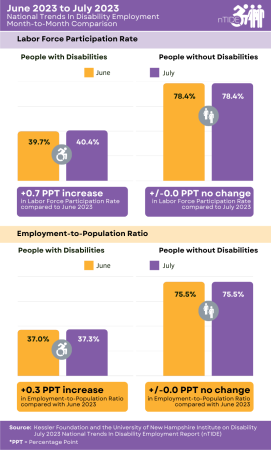
The latest National Trend in Disability Employment (nTIDE) from NJ’s Kessler Foundation may help in defining the current reality of those other barriers. Hmm, a seven-tenth of one percent increase over 30 days nationally. Certainly, that is a positive trend for people with disabilities, but does it support the current thinking behind the premium proposal that, somehow, all these other barriers will disappear creating this stampede of people with disabilities obtaining gainful employment once these income limits are increased?
This reasoning ignores that the WorkAbility reform intended to allow people already working and on WorkAbility to have salary increases without endangering their long-term support services needed to work. High pay means paying more taxes, which may actually be a net savings to the program. Allowing the current WorkAbility recipients to get higher salaries does not increase the program’s costs. They stay the same no matter what the recipient is paid.
Yes, in the coming years, WorkAbility will get more people applying; yes, a cost-sharing premium may be needed at some point. But let the people on the program now have a chance to increase their incomes before imposing this additional tax on us. It’s not equitable or fair, and it’s based on faulty assumptions.
Norman A. Smith, HCCP
Co-Founder/Associate Executive Director
Project Freedom Inc.
Past Chair, NJ Statewide Independent Living Council
The National Council on Disability (NCD), a presidentially-appointed council, has written that the foundation of a person’s ability to live, learn, work, and earn, is to have and maintain good health that encompasses mental, physical, and overall well-being. But there are great disparities in the health care system for people with disabilities to prevent this. To begin to correct some of these disparities, the NCD calls for us to be designated SMUPs. These are not little blue people!
Let’s look at why the NCD wants this designation before explaining what SMUPs are.
“For people across all categories of disabilities, attaining and maintaining good health has been elusive,” the NCD wrote in a recent report. The “unwelcoming healthcare system….for decades has failed 26% of the United States population, so much so that people with disabilities utilize the healthcare system for disease management instead of disease prevention.” People with disabilities “can even view the healthcare system as a source of potential harm.”
“It is a paradigm that exists as a result of avoidable systemic barriers within our healthcare system,” stated the NCD.
Some of NCD’s findings are:
If you are a person with a physical, intellectual, or developmental disability, your life expectancy is less than that of someone without disabilities.
You are more than three times as likely to have arthritis, diabetes, and a heart attack.
You are five times more likely to report a stroke, Chronic Obstructive Pulmonary Disease, and depression.
You are more likely to be obese.
You are significantly more likely to have unmet medical, dental, and prescription needs.
If you are a woman with a disability, you are likely to receive poorer maternity care and less likely to have received a Pap smear test or a mammogram.
If you are a pregnant woman with a disability, you have a much higher risk for severe pregnancy- and birth-related complications and eleven times the risk of maternal death.
If you are an adult who is Deaf or hard of hearing, you are three times as likely to report fair or poor health as compared to those who do not have hearing impairments.
If you have an intellectual disability, it is the strongest predictor for COVID-19 infection and the second strongest predictor for COVID-19 death.
If you live in a rural area, your disability appears to further worsen barriers to accessing healthcare.
These disparities are exacerbated if you are a person with a disability and a person of color.
NCD’s proposed solution to combat the institutional barriers in the health care system is NCD’s Health Equity for People with Disabilities Framework.
Through its research, collaboration with experts, and consultation with members of the disability community, NCD’s findings reveal five primary policy issues to build upon the advancement of health equity for people with disabilities. Drumroll, please!
They include:
Designating people with disabilities as a Special Medically Underserved Population (SMUP) under the Public Health Services Act;
Designating people with disabilities as a Health Disparity Population under the Minority Health and Health Disparities Research and Education Act;
Requiring comprehensive disability clinical-care curricula in all US medical, nursing and other healthcare professional schools and requiring disability competency education and training of medical, nursing and other healthcare professionals;
Requiring the use of accessible medical and diagnostic equipment; and
Improving data collection concerning healthcare for people with disabilities across the lifespan.
The first component requires congressional action in terms of passing legislation. Of course, that rang my advocacy alert bells.
To achieve health equity for people with disabilities, it is critical that people with disabilities be legally identified as a Special Medically Underserved Population (SMUP) under the Public Health Service Act, with the corresponding benefits associated with that designation. Medically Underserved Population designations require population groupings based upon geography. This is not an applicable means of providing equitable healthcare to the national community of people with disabilities. To get around this technicality, people with disabilities must be designated by Congress as a Special Medically Underserved Population through a revision of Section 330 of the Public Health Service Act.
A copy of NCD’s latest report on this issue, where all of the above information was excerpted. can be found here.
I will be following this issue and will be connecting with Project Freedom’s congressional contingent (Reps. Chris Smith, Andy Kim, and Jeff Van Drew: Senators Robert Menendez and Corey Booker) to make them aware of this issue. Watch for future updates.
The New Jersey Legislature passed a law that requires the New Jersey Department of Human Services (DHS) to study social isolation among four specified groups: seniors age 65 and older, individuals with disabilities, individuals with mental illness, and those who have or currently serve in the military.
For this study, social isolation is defined as a lack of contact or meaningful connection with others. Social isolation may have varying effects on someone’s quality of life and well-being. By studying how widespread social isolation is and determining related risk factors, it is hoped that services can be improved or introduced to improve people’s lives.
Your participation in this survey is completely voluntary. Your responses will not affect the services you receive. If you are helping someone to complete the survey, please make sure you are providing their responses and not your own.
All responses provided are anonymous and will be reported in an aggregated manner. Any questions regarding this survey can be sent to Oresp@dhs.nj.gov.
Tim Doherty and Norman Smith remember John K. “Jack” Rafferty and his impact on Project Freedom’s formative year.
It was sad for everyone in Hamilton and Mercer County to learn of Jack’s passing this February. He did so much for the citizens of Hamilton Township and for a little organizations like Project Freedom. Many people may not know the full true story of how Project Freedom got established. Much of who we are today, couldn’t have been done, without Jack’s help. So, here’s the story.
We all know that Project Freedom was Norman Smith’s dream for achieving his independence. When he returned home from college living once again with his elderly parents, he felt his life was taking a step back rather than a step forward with a new life. He had successfully lived in New York at college with his roommate, and knew that he could accomplish anything he put his mind to if only given the supports he needed.
So, Norman along with Frieda Applegate started the Nottingham Recreation Center for the Physically Limited. They organized a day program and then began to think about the other needs such as housing. Long and short, Norman gathered community support with others, including myself, who had family members with a disability. Along the way, Jack Rafferty, the mayor of Hamilton heard about Norman’s efforts and over the early years provided meeting space for his program activities. Eventually Jack ran and won a single term in the New Jersey Legislature, and as part of that membership was able to get a single grant for $ 150,000 for Project Freedom. After several years of fundraising, bingos, and the like, it was this grant that really gave Project Freedom the ability to hire an architect and seriously talk about housing.
That effort became reality in 1990, when Project Freedom was able to win tax credits that year and ultimately build our first Project Freedom on Hutchinson Rd in Robbinsville. We tried to find land in Hamilton, however none was available at the time. We did finally build in Hamilton in 2000, when we purchased land from St. Anthony’s on Kuser Road.
Along the way, many people helped get Project Freedom where we are today, but it was that initial support from our Hamilton Angel, Jack Rafferty, that really got us going. In subsequent years, Jack would come to our yearly gala’s and helped with our ongoing fundraising. He was so proud when we were able to finally bring our housing to Hamilton, and build our 48 units there on Kuser Road.
As Mayor of Hamilton Jack helped so many other non profits and community organizations in Hamilton. I know that he is personally responsible for the success of the Hamilton Y and all that they offer Hamilton consumers. Jack Rafferty will always be remembered as our Angel.
–Tim Doherty
This month is the 37th anniversary of Project Freedom’s incorporation as an organization in New Jersey. It was our first serious step toward bringing an idea into concrete reality.
In the life of any organization, there are moments in time when an individual makes a big difference. Project Freedom has had many, but in those early years when the path to success was fraught with obstacles, one political person was truly Project Freedom’s first angel.
John K. “Jack” Rafferty was mayor of Hamilton Township when the “Project Freedom” concept was first conceived. By shear happenstance, I was invited to write for Jack’s unsuccessful run for governor, and as I have written many times, that brief opportunity gave me visibility and credibility to promote the idea of what Project Freedom became.
In fact, our name came out a meeting with Jack when he asked Frieda Applegate and me what we were going to call this “house” we wanted to build. Frieda looked at me, and with very little thought “Project Freedom” popped out of my mouth. And that became our marketing tool before we incorporated.
A couple years later, Jack became Assemblyman Rafferty, and he was able to secure $150,000 state grant for Project Freedom through legislation. This was fuel for our planning engine as it empowered us to get architectural plans and hire all the professionals for the development phase of a building project.
Jack did that for us at a time when we were spinning our proverbial wheels. From there, we had a path to move forward. The path had more pitfalls and obstacles, but we had a way forward and professionals to help.
I’m remembering this because my friend Jack Rafferty passed in February . He is mourned by many in New Jersey as a decent and dedicated family man, public servant, and politician who loved his community.
In an online remembrance of Jack, I contributed these thoughts:
“Jack Rafferty was a friend; he was a friend to me, a friend to Project Freedom, and a friend to the disability community. I was a small part of Jack’s gubernatorial campaign, and this opened doors for me to co-found Project Freedom. When Jack was in the legislature, he secured seed money that enabled our first complex to be planned. Jack established one of the first Mayor’s Office for Disabilities in New Jersey during a time when we had very limited community visibility. He truly was an angel to Project Freedom, and for that reason we gave Jack our first Angel Award.”
We will miss Jack, but his legacy continues every time we open a new community. Rest in Peace, my friend.
–Norman A. Smith
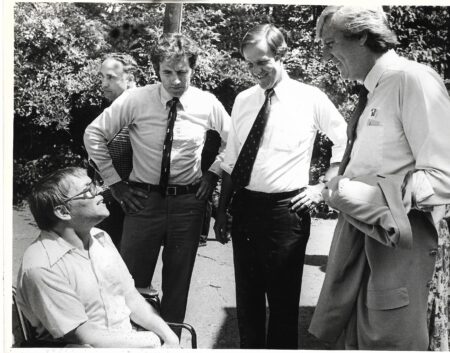
Right to Left, Jack Rafferty, future NJ Governor Tom Kean, Bill Mathesius, and Norman Smith in the Summer of 1981
Norman A. Smith Co-Founder & Associate Executive Director
“True freedom is to have power over oneself for everything,” wrote French philosopher Michel de Montaigne in 1588. For 36 years Project Freedom has implemented this concept for people with disabilities through our housing and advocacy. This happens through the generous support of friends and contributors during bad times and good times.
This past year was probably the most challenging of Project Freedom’s history. It has been the opposite of freedom and independence and optimism. It has been dark and foreboding and a bit scary.
Yet through it all the glimmer of light from the flame of hope never went out. Our tenants—especially those with disabilities–proved their resilience and strength every day as they dealt with the lockdown. We learned how to help each other stay healthy and safe as we fought off loneliness and isolation through technology.
Project Freedom moved forward with opening two new complexes, constructing a third, moving forward on a fourth in pre-construction and a fifth in active planning. All the while, supporting the most vulnerable tenants with donated food and information resources. Project Freedom’s impact never wavered. Our advocacy never ceased.
With your help, our impact will be greater in the next years as we continue promote freedom through independent living when the COVID-19 virus is conquered. This is the season for giving, and if you are so inclined to give to Project Freedom, it is not too late to become a 20120 Supporter! Your gift will be appreciated and acknowledged by yours truly. Donate Now Button
Project Freedom is also an AmazonSmile charity, and you may select us if you participate in that program as you buy gifts. Go to smile.amazon.com/ch/22-2532804 and Amazon donates to Project Freedom Inc.
Meanwhile, I hope all of my readers have wonderful and joyous holidays, receive the gift of peace and love, and have the companionship of those dearest to you.
Norman A. Smith,
Follow me on Twitter @normansmith02
Follow us on Twitter @TheFreedomGuys
“Like” us on Facebook.com/ProjectFreedomInc
Readers of my monthly column should know by now that I’m interested in politics, and especially the intersection of politics, disability, and the resulting public policies that impact on people with disabilities.
The interest stems from being trained as a journalist during the Carter-Ford presidential campaign while living on a college campus with many activists with disabilities. I caught the “inside politics” fever.
And, by happenstance, I became involved with two political campaigns upon returning to New Jersey. One for a Republican and one for a Democrat, and I quickly learned that disability-related policies are not partisan issues at the local level.
I also learned that participating in campaigns is a great way to educate people in politics about “our issues,” and it is very helpful in building up credibility if you decide to do something unusual like start building housing to support people with disabilities. I cannot tell you how helpful it is to advocate for something with politicians who know you personally.
This is why I encourage anybody with a disability to get involved with politics. First and foremost as voters. Then, if you like a candidate, become involved by volunteering with the campaign. Become engaged, ask questions, and don’t just focus on disability issues.
We live in the Community. We need to ask about issues beyond our own because our needs for safe neighborhoods, effective and efficient local governments, well maintained infrastructure, and well-run services are just as great as our able-bodied neighbors
I’m a great believer in democracy even as messy and raucous as ours is right now. What is happening now, however, is not that unusual if you delve into early U.S. history. If it existed, Twitter would have been used by Thomas Jefferson and Alexander Hamilton to insult and degrade each other in their campaigns. Instead, they used the printing press to print daily or hourly “broadsheets” to accuse each other of lying, cheating, or having scurrilous vices like enjoying Thespians..
Our democracy is cheapened by the ugly discourse, but it is endangered much more by people opting not to participate in the process. Sure, there are winners and losers with participatory politics elections, and, sure, democracies sometime make huge mistakes with major consequences. The key to democracy is to stay engaged no matter who wins or loses.
A year ago I predicted we would be in the most contentious presidential campaign in my experience. Little did I know that we would be smack in the middle of a deadly pandemic, a racial reckoning, seemingly endless natural disasters, and wacko fringe elements stoking civil strife for the causing chaos. It is enough to make someone disengage.
This month marks nineteen years since the attacks of September 11th. National Preparedness Month is also recognized each September to promote family and community disaster and emergency planning now and throughout the year.
The 2020 theme is: Disasters Don’t Wait. Make Your Plan Today.
For many, the memory of that awful September day in 2001 is fading, but my memories are still vivid down to my shirt and tie. The day started out so bright, beautiful, and refreshing, but it ended so dark and frightening. The feeling of anger and uncertainty spread around us like a cloaking fog.
That feeling is around us again as COVID-19 has changed our lives, and the future is uncertain as we all work through this “new normal.”
Every year since the attacks, I choose to pay tribute to the three elements that create my memory of that day. First, I honor the life of my friend and colleague Colleen Fraser who died on Flight 93 with those other selfless heroes who may have saved the U.S. Capitol or the White House and thousands of other lives. Colleen was a fighter, and she was in good company that morning fighting to take back that plane.
Second, I remember the lives of the 343 FDNY firefighters who died that day. Most knew going into those buildings that some of them would not come out alive. They knew this instinctively by virtue of their experience and profession. They still went in with police officers and EMS personnel to save those who could not save themselves. They went in to save people with disabilities.
And, yes, thirdly, I remember those people with disabilities who died that day in those towers. I was not watching the horror on television that morning. I had a meeting at 10:00, and during that meeting I spoke of Colleen and wanting to connect her with someone. Later, someone told me of the collapse. My very first thought was that many firefighters had just died; my immediate second thought was that many people with disabilities had died as well.
This year I also pay tribute to the doctors, nurses, medical support staff, direct care staff, and first responders who put their lives on the line trying to save others from COVID-19. They also ran toward danger to help others, and many paid with their health or their lives.
How many people with disabilities died that morning in September may never be known. We do know that the corporations and government agencies housed in those towers hired people with disabilities. We do know that some people with disabilities made it out because they had a plan, their company had a plan, or some colleague or friend took the initiative to get them out. We do know that others stayed behind not wanting to burden friends, not wanting to get in the way, or just having unwavering faith that the FDNY would get to them. We also know that loyal friends stayed behind with them. We know that some people with disabilities who stayed were rescued but many died with their rescuers.
In the same manner how many people with disabilities have died from COVID-19 may never be accurately known. We do know that nearly 40% of the COVID-19 deaths occurred in nursing homes where many people with disabilities are forced to live. We do know that people with disabilities living in the community have been isolated by the lack of community-based direct support workers. We do know that the government is not tracking the deaths of people with disabilities as a COVID-19 statistic.
Every victim of these national tragedies needs to be remembered and honored. I feel a personal duty to honor Colleen, The 343, and those almost nameless people with disabilities who stayed behind that September day. I also honor the nearly 200,000 persons who have died in this pandemic.
As I say each year, let us all remember the victims and the heroes of September 11, 2001, by getting prepared and staying prepared. You never know how a bright, beautiful, and refreshing day may end.
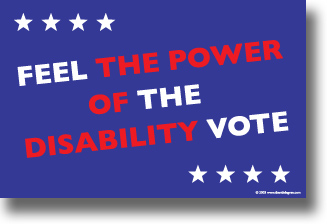
For the thirteenth time in my life, I will vote again this year to elect the President of the United States of America. I remember in in 1972 being forced to vote two weeks ahead of time by absentee ballot because my polling place was in accessible. I remember in 1992 being challenged at the poll because of my disability, and I remember the empowerment I felt by calling a state hotline while at the poll to “fix” the situation to my satisfaction.
Times have changed for people with disabilities in terms of voting ease. Now most polling places and polling booths are accessible, but this year COVID-19 is forcing many states to encourage voting by mail for everyone in many states. Yes, there are still barriers to voting—especially this year in other states, but there is no excuse for any person with a disability not to vote. Nothing about us without us, right?
But I want to talk again about something besides voting. I want to talk about people with disabilities getting involved with political campaigns. Of course, COVID-19 is preventing this kind of activity this year, but it is important to see how you can become involved through technology and Social Media.
I became involved with campaigns twice when I first starting out as a disability advocate. I worked on a statewide Republican campaign for governor and a county campaign for a Democrat. They both lost, and that may be a commentary of the type of person I support.
Nevertheless, these campaigns opened doors for me, and, more importantly, these candidates, their staffers and supporters gained a greater understanding of my needs as a person with a disability. This was a great asset in advocating on disability issues through these same people over the years.
The disability community has a saying: “Nothing about us without us!” It means that people, programs, agencies, and governments shouldn’t make decisions about people with disabilities without our involvement in the decision process. Well, the decision process for the 2020 elections is moving ahead on all levels of government. We need to be involved!
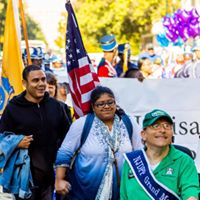
Our nation celebrates its Declaration of Independence from Great Britain on July 4th. We celebrate the idea that this nation wanted to be free from rules, regulations, and laws created without input from the Colonies. This year the celebration will be different for me.
We will try celebrate the concept that each person has equality in the eyes of the law even though we know that it is not reality for many. People are treated differently because of skin color, race, gender, gender identity, age, and, yes, disability.
I live with a disability, so I focus on those inequities in my writing. Nevertheless, the struggle for racial equality has never been far from my life. I lived in Philadelphia in 1962 at a school for kids with disabilities. The direct care staff was made of African-Americans, and I remember watching the Civil Rights struggle on the TV news with them. I remember their tears and their quiet anger. I remember trying to make sense of why black people were being beaten. It didn’t make sense to me.
The turbulent 60’s went by with all the racial, social, and political strife, and in the mid-70s I found myself at Long Island University riding an elevator with a schoolmate. The schoolmate was black, male, and in NYPD handcuffs. I knew him well since we served on the Dorm’s Council together. He was arrested by a white police officer for (I later learned) a minor charge. My schoolmate said something to me in greeting and was promptly shoved violently against the elevator wall by the officer.
I was shocked and angered. My schoolmate later returned to warn me not to say anything about the shoving. He said it would make his case more difficult. I agreed, but this incident opened my eyes to what “equality under the law” actually means.
As we celebrate Independence Day, we need to remember equality is not universally applied. We need to remember the sacrifices of those who have died for the concepts of independence, liberty, and freedom.
Sometimes they died without enjoying those lofty concepts. Sometimes they didn’t die but moved into my world to endure additional inequalities of a disability.
We must also remember that the fight is not over for many people. Expecting the promise of freedom to be obtained or kept without struggle and sacrifice is foolhardy. Our history teaches that participatory governance over oneself or one’s country means stepping up to participate and sacrifice. Individuals must take up the cause of freedom, work together, and battle for the promise to be kept. This is true now for many people with and without disabilities.
So, while we celebrate what happened 244 years ago, let us remember for many of us the struggle for freedom continues!
Norman A. Smith, Co-Founder Associate Executive Director
It is May! It is time for my annual rant as we near Hurricane Season.
It is time to focus on the looming hurricanes season and the predictions by the Colorado State University tropical study program. This year is no different—especially because we are in the tail end of the first wave of a pandemic.
Yes, I wrote “the first wave.” Historically, pandemics come in three waves, and the severity of those waves vary. Dr. Anthony Fauci, the director of the National Institute of Allergy and Infectious Disease, has already stated that the next wave of COVID19 will hit this Fall and will be more severe.
Fall is also the peak of hurricane season, and the idea of a major hurricane crashing into to the US during another severe wave of COVID19 is frightening. But it needs to be anticipated and planned for with the lessons we have learned the past three months. We have already seen tornado rip through states this past month complicating the fight against COVID19.
As I write this, the American Red Cross is sheltering nearly 900 people in four states hit by tornados. Luckily, hotel rooms were available for a better sheltering option than public schools during this outbreak. Imagine Super Storm Sandy happening now or a major extended power outage.
So now is the time to prepare for both the second wave and foreseeable disasters as we look to opening back up again. If you realized that you should have done a specific task or tasks before the COVID19 shutdown, use that knowledge to prepare yourself better for the next wave and other potential disasters.
That prediction came true over five years ago with Hurricane/Super-Storm Sandy slamming into New Jersey. This year’s predictions by Colorado State University’s team, now his for a “slightly below” average season for 2019.
This is the 37th year that the hurricane research team at the Department of Atmospheric Science, Colorado State University has issued the Atlantic basin seasonal hurricane forecast. Dr. William Gray, Ph., launched the report in 1984 and continued to be an author on them until his death in 2016. He team is now headed by Dr. Philip J. Klotzbach.
Dr. Klotzbach’s team’s initial prediction is:
A total of 16 named storms with eight hurricanes and four of them becoming major hurricanes.
Last year’s prediction was 13 named storms, five becoming hurricanes, and two reaching the major threshold. Thus, the prediction for this year is for more storms with a greater potential of severity.
The actual number for the 2019 season was 18 named storms; three of these storms turned into hurricanes with two being “major” in power and scale. So they under-estimated the number of storms but overestimated their severity.
The prediction also estimates the probabilities of at least one major hurricane making landfall:
For the Entire U.S. coastline – 69% (Last year it was 48%)
For the U.S. East Coast including Peninsula Florida – 45% (28% last year)
With this year’s prediction in mind and remembering what we have just gone through, it is not too early to start thinking about severe weather and being prepared for it. The first step is being more aware of both the potential threat and the “emergent” or imminent threat. Here is what FEMA recommends that people with disabilities do to address that need.
 This month marks nineteen years since the attacks of September 11th. National Preparedness Month is also recognized each September to promote family and community disaster and emergency planning now and throughout the year.
 Our nation celebrates its Declaration of Independence from Great Britain on July 4th. We celebrate the idea that this nation wanted to be free from rules, regulations, and laws created without input from the Colonies. This year the celebration will be different for me.